
Duolingo is genuinely free for the thing most people want: learning a language a lesson at a time. What you do not get for free is protection from the app’s own brakes — the energy meter that stops you practising, and the streak you can lose while you are ill.
If you study for ten or fifteen minutes a day, the free tier is the product. If you ever sit down for an hour and get told to come back later, that is the paid line, and it is worth understanding before you decide.
Illustration drawn by Dlzer. The length is our editorial point, not a measurement taken from the app — the app itself labels the resource it is rationing, and its paid plan removes it.
What the app itself claimsThe two sentences that decide everything
Duolingo, from its own app-store description.
Same description, describing the paid plan.
Read the second one as an itemised list of what the first one does not include. No ads. Unlimited energy. Streak repair. That is the boundary, stated by the company, and it is a better guide than any reviewer’s opinion of whether the free version is “generous”.

Where free stops feeling freeThree frictions, named
| You hit | What it actually costs | Free workaround |
|---|---|---|
| Energy runs out mid-session | A long sit-down gets cut short, which is the one thing a motivated learner does on a Sunday | Two short sessions beat one long one anyway; the meter is per-sprint |
| You lose a streak | Nothing, except the feeling. The streak is a habit device aimed at you, not a record of ability | Study at the same time daily; treat a broken streak as data about your schedule |
| Ads between lessons | Time, and the small friction of being sold to while recalling vocabulary | Do the practice you already know instead of the next new lesson |
Our reading The company is not hiding this. Energy is on screen while you use it, and its description lists what removing it costs. The mistake is signing up for a year because a lesson told you that you were about to lose something you did not own.
Before you payOne paragraph about subscriptions, because the trap is in the renewal
Duolingo states the mechanic in its listing: “If you choose to purchase Super Duolingo, payment will be charged to your Apple account.” The part that catches people is the next idea in the same paragraph — a subscription renews unless you cancel before the period ends, and the app will happily let you forget. There is also a line in the same description about a free trial: “Any unused portion of a free trial period, if offered, will be forfeited when the user purchases a subscription to that publication, where applicable.”
Set the cancel reminder for the day you subscribe, not for the week the charge arrives. Then decide in a month whether you actually used the thing you bought: if you never hit the energy wall again, you bought peace of mind, and the free tier was fine.
Making the free tier workSix things that do not cost anything
- Pick one language and stay. Progress you can feel is the only thing that survives week three.
- Do the review of old lessons before new ones when you have five minutes. Reviews are cheap on the meter and they are what makes recall stick.
- Say the answers aloud. The app cannot make your mouth work; a lesson read silently is half a lesson.
- Turn on the daily reminder rather than trusting motivation. The streak works because it is visible, and that is a feature you get free.
- Add one thing you actually need to say — a job phrase, a sentence for a relative — and hunt for it in the lessons. Purpose survives the gamification.
- If the app starts feeling like a chore, stop the streak argument and cut to ten minutes. The counter is not the curriculum.
The exact size of the energy allowance, the current price of the paid plan, and what happens to your progress if you cancel. Those numbers change and are shown in the app, so they are deliberately absent here. Energy and streak mechanics were not tested by us on a live account for this piece; the description quoted above is the company’s own statement, and the table is our reading of it.
- All quoted sentences about the free app, the paid plan’s contents, the charge to your account and the free-trial forfeiture — the app description Duolingo supplies for its own store listing, retrieved from the store’s public catalogue interface and compared word for word with this page after normalising quotation marks and ampersands.
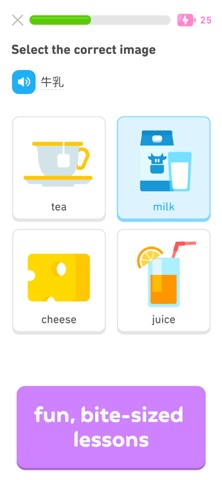
- Two store images — supplied by Duolingo and served by the store, captioned by what is visible in each frame, including the energy counter. We did not take these screenshots ourselves.
- The meter illustration — drawn by Dlzer. It carries no measurement from the app and says so in its caption.
- The table, the six free habits and the money advice — our editorial judgement. Not vendor claims, not test results, and not a recommendation about which plan is right for a specific person.
Duolingo’s page on this site, with its feature list and store screenshots, is here. If you want the free-versus-paid boundary drawn differently for another app, our learning and education hub lists the rest of the study apps we cover.
Written by the Dlzer editorial desk. Not affiliated with, endorsed by or sponsored by Duolingo, Inc. Duolingo and its product names belong to their owner and are used here to identify the app; quoted lines are the company’s statements about its own product.